


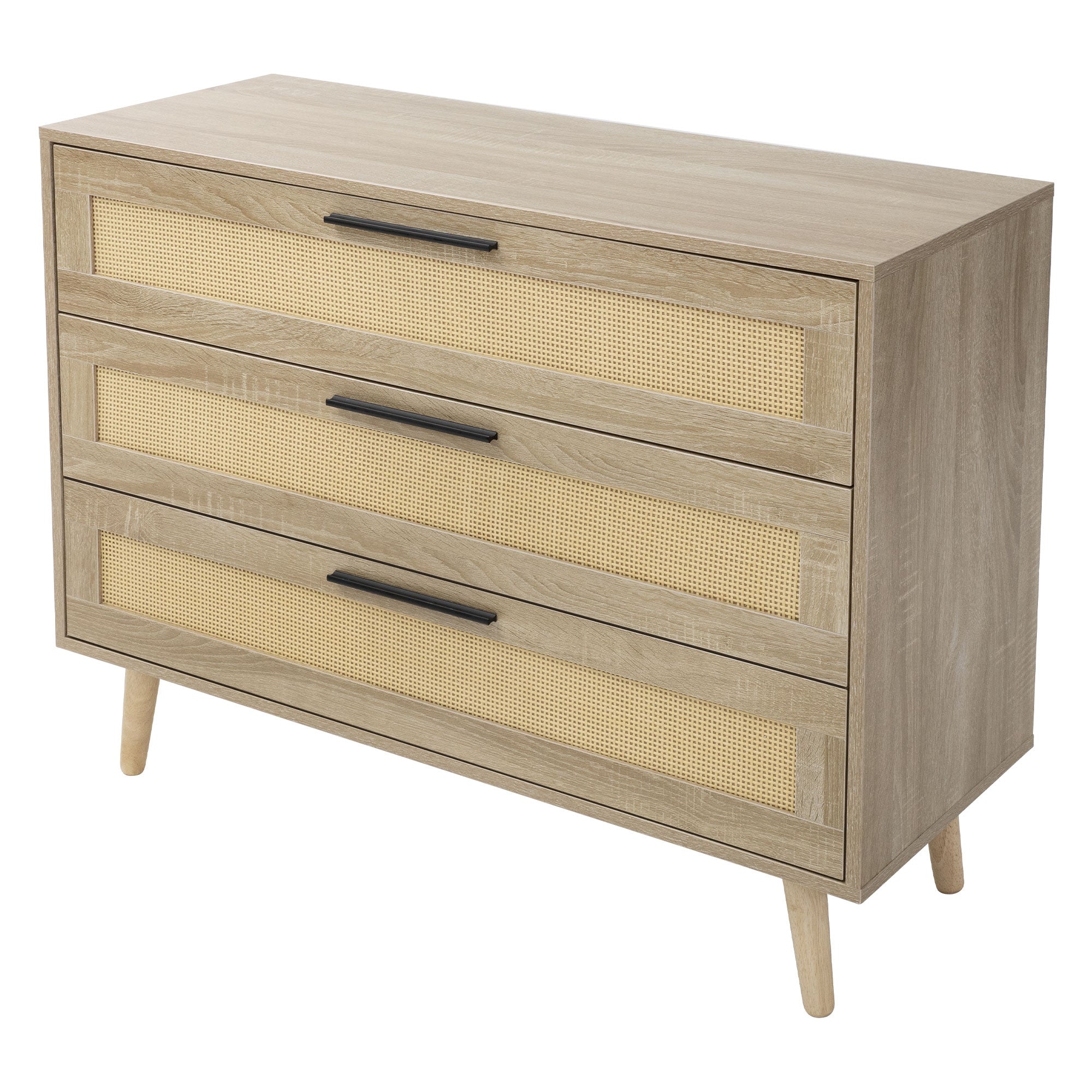
Dressers & Sideboards – stylish storage for every living area
Dressers and sideboards are among the most versatile pieces of furniture in the home. They create additional storage space, keep living and dining areas tidy, and can also be used as decorative surfaces. Depending on their design, size, and material, they can be flexibly used in living rooms, dining rooms, bedrooms, hallways, or home offices.
What is the difference between a dresser and a sideboard?
The terms are sometimes used interchangeably in everyday language, but there are typical differences. A dresser is often somewhat more compact and can have both drawers and doors. A sideboard, on the other hand, is usually wider and lower and is often used as additional storage against a wall.
- Dresser: compact, often with drawers
- Sideboard: wider and lower, often with doors and compartments
- Display cabinet: storage behind glass for showcasing items
What is a display cabinet and what is it used for?
A display cabinet is a piece of furniture with glass sections where items can be visibly stored. It thus combines storage space with a display area.
In a display cabinet, for example, dishes, glasses, decorations, collectibles, or personal mementos can be stored. Especially in the living or dining room, a display cabinet can ensure that selected items are stored safely while being stylishly presented. On the other hand, those who want to store as much as possible without the contents being visible are often better off with a closed dresser or sideboard.
What should be considered regarding the size of a dresser?
The right size of a dresser mainly depends on the available space and the desired storage capacity. Before purchasing, the available floor space should be measured precisely. In doing so, not only width and height but also depth should be taken into account.
- Width
- Height
- Depth
- Number and size of drawers
- Number of compartments
- Required floor space
- Distance to other furniture
Additionally, it is worth planning the space required for doors and drawers. A chest of drawers should be able to open fully without other pieces of furniture or doors getting in the way. While a larger chest of drawers offers more storage space, it can quickly appear bulky in a small room. For smaller rooms, narrower models may be the better choice.
How deep should a chest of drawers be?
The ideal depth depends on what is to be stored in the chest of drawers and where it will be placed. A depth that is too shallow can limit storage space, while a particularly deep piece of furniture may protrude too much into the room. For clothing, household items, or decoration, a medium depth is often sufficient. In hallways or small rooms, narrower chests of drawers are particularly practical.
How high should a sideboard be?
A sideboard is typically lower than a classic chest of drawers or a tall cabinet. However, the appropriate height depends heavily on the area of use and the rest of the furnishings. In the living room, for example, a low sideboard can stand under a television or wall decoration. In the dining room, it can serve as a practical storage space for dishes, glasses, or table accessories.
What can be stored in a sideboard?
A sideboard offers versatile storage and can be used in different rooms. In the dining room, for example, it is suitable for storing dishes, cutlery, tablecloths, or glasses. In the living room, books, games, electronic accessories, documents, or various household items can be accommodated in it.
- Dishes and glasses
- Books and magazines
- Table linen
- Decoration
- Games
- Documents
- Electronic accessories
- Household items
Which chest of drawers fits which style of living?
A chest of drawers should harmoniously blend into the existing furnishings. Material, color, shape, and handles play an important role in this. Depending on the style of living, different design features may be interesting.
- Modern: clear shapes and subtle colors
- Scandinavian: bright colors and natural wood look
- Industrial: metal, dark colors, and striking constructions
- Classic: timeless shapes and subtle details
- Minimalist: reduced design and few visible elements
Chest of drawers, sideboard, or display cabinet – which solution fits?
All three types of furniture serve similar basic functions but emphasize different aspects. A chest of drawers is particularly practical when compact storage is needed. A sideboard is well-suited for longer wall spaces and often provides a generous surface area. A display cabinet, on the other hand, is interesting when certain items are to be consciously presented.
- Much closed storage: chest of drawers or sideboard
- Large surface area: sideboard
- Decoration and presentation: display cabinet
- Compact storage: chest of drawers
Chests of drawers in the living room
In the living room, a chest of drawers can create additional storage without filling the room with a large cabinet. It can, for example, stand under a wall decoration or serve as a surface for plants, picture frames, and other decorations. Sideboards are also particularly popular in the living room. Due to their low and wide shape, they can visually structure a wall while providing plenty of storage.
Sideboards and chests of drawers in the dining room
In the dining room, additional storage options are particularly practical. Dishes, glasses, cutlery, and table linens can be stored close to the dining table. A sideboard offers the advantage of a generous top surface that can be used for a vase, picture frames, or seasonal decorations.
Drawers or doors – which is better?
Whether drawers or doors are more practical depends on the intended use. Drawers are particularly well-suited for smaller items that need to be quickly accessible. Larger items or several different things can be stored behind doors. A combination of both options can be particularly versatile.
What should you pay attention to when buying?
When buying a chest of drawers or a sideboard, appearance should not be the only deciding factor. Dimensions, material, and storage space must also fit the intended use. Especially with online orders, it is worth taking a look at the exact product dimensions.
- suitable dimensions
- sufficient storage space
- material and workmanship
- Number of drawers and compartments
- Load capacity
- Stability
- Design
- Maintenance effort
- Price-performance ratio
Dressers & Sideboards by ML-Design
With ML-Design, practical storage solutions can be combined with modern furnishings. Dressers and sideboards not only help to keep things organized but can also serve as a stylish addition to the living space. Whether in the living room, dining room, bedroom, or hallway – different sizes, shapes, and designs allow the furniture piece to be selected to match the available space and personal living style.
Conclusion: Storage that fits the furnishings
Dressers, sideboards, and display cabinets offer numerous possibilities to combine order and design. While dressers are particularly versatile and compact, sideboards are suitable for larger wall areas and generous storage space. Display cabinets are ideal when selected items should be visibly presented. When choosing, especially dimensions, storage space, material, design, and area of use should be considered.
Discover now the dressers and sideboards from ML-Design and find a piece of furniture that combines practical storage with your personal living style.



Dressers & Sideboards – stylish storage for every living area
Dressers and sideboards are among the most versatile pieces of furniture in the home. They create additional storage space, keep living and dining areas tidy, and can also be used as decorative surfaces. Depending on their design, size, and material, they can be flexibly used in living rooms, dining rooms, bedrooms, hallways, or home offices.
What is the difference between a dresser and a sideboard?
The terms are sometimes used interchangeably in everyday language, but there are typical differences. A dresser is often somewhat more compact and can have both drawers and doors. A sideboard, on the other hand, is usually wider and lower and is often used as additional storage against a wall.
- Dresser: compact, often with drawers
- Sideboard: wider and lower, often with doors and compartments
- Display cabinet: storage behind glass for showcasing items
What is a display cabinet and what is it used for?
A display cabinet is a piece of furniture with glass sections where items can be visibly stored. It thus combines storage space with a display area.
In a display cabinet, for example, dishes, glasses, decorations, collectibles, or personal mementos can be stored. Especially in the living or dining room, a display cabinet can ensure that selected items are stored safely while being stylishly presented. On the other hand, those who want to store as much as possible without the contents being visible are often better off with a closed dresser or sideboard.
What should be considered regarding the size of a dresser?
The right size of a dresser mainly depends on the available space and the desired storage capacity. Before purchasing, the available floor space should be measured precisely. In doing so, not only width and height but also depth should be taken into account.
- Width
- Height
- Depth
- Number and size of drawers
- Number of compartments
- Required floor space
- Distance to other furniture
Additionally, it is worth planning the space required for doors and drawers. A chest of drawers should be able to open fully without other pieces of furniture or doors getting in the way. While a larger chest of drawers offers more storage space, it can quickly appear bulky in a small room. For smaller rooms, narrower models may be the better choice.
How deep should a chest of drawers be?
The ideal depth depends on what is to be stored in the chest of drawers and where it will be placed. A depth that is too shallow can limit storage space, while a particularly deep piece of furniture may protrude too much into the room. For clothing, household items, or decoration, a medium depth is often sufficient. In hallways or small rooms, narrower chests of drawers are particularly practical.
How high should a sideboard be?
A sideboard is typically lower than a classic chest of drawers or a tall cabinet. However, the appropriate height depends heavily on the area of use and the rest of the furnishings. In the living room, for example, a low sideboard can stand under a television or wall decoration. In the dining room, it can serve as a practical storage space for dishes, glasses, or table accessories.
What can be stored in a sideboard?
A sideboard offers versatile storage and can be used in different rooms. In the dining room, for example, it is suitable for storing dishes, cutlery, tablecloths, or glasses. In the living room, books, games, electronic accessories, documents, or various household items can be accommodated in it.
- Dishes and glasses
- Books and magazines
- Table linen
- Decoration
- Games
- Documents
- Electronic accessories
- Household items
Which chest of drawers fits which style of living?
A chest of drawers should harmoniously blend into the existing furnishings. Material, color, shape, and handles play an important role in this. Depending on the style of living, different design features may be interesting.
- Modern: clear shapes and subtle colors
- Scandinavian: bright colors and natural wood look
- Industrial: metal, dark colors, and striking constructions
- Classic: timeless shapes and subtle details
- Minimalist: reduced design and few visible elements
Chest of drawers, sideboard, or display cabinet – which solution fits?
All three types of furniture serve similar basic functions but emphasize different aspects. A chest of drawers is particularly practical when compact storage is needed. A sideboard is well-suited for longer wall spaces and often provides a generous surface area. A display cabinet, on the other hand, is interesting when certain items are to be consciously presented.
- Much closed storage: chest of drawers or sideboard
- Large surface area: sideboard
- Decoration and presentation: display cabinet
- Compact storage: chest of drawers
Chests of drawers in the living room
In the living room, a chest of drawers can create additional storage without filling the room with a large cabinet. It can, for example, stand under a wall decoration or serve as a surface for plants, picture frames, and other decorations. Sideboards are also particularly popular in the living room. Due to their low and wide shape, they can visually structure a wall while providing plenty of storage.
Sideboards and chests of drawers in the dining room
In the dining room, additional storage options are particularly practical. Dishes, glasses, cutlery, and table linens can be stored close to the dining table. A sideboard offers the advantage of a generous top surface that can be used for a vase, picture frames, or seasonal decorations.
Drawers or doors – which is better?
Whether drawers or doors are more practical depends on the intended use. Drawers are particularly well-suited for smaller items that need to be quickly accessible. Larger items or several different things can be stored behind doors. A combination of both options can be particularly versatile.
What should you pay attention to when buying?
When buying a chest of drawers or a sideboard, appearance should not be the only deciding factor. Dimensions, material, and storage space must also fit the intended use. Especially with online orders, it is worth taking a look at the exact product dimensions.
- suitable dimensions
- sufficient storage space
- material and workmanship
- Number of drawers and compartments
- Load capacity
- Stability
- Design
- Maintenance effort
- Price-performance ratio
Dressers & Sideboards by ML-Design
With ML-Design, practical storage solutions can be combined with modern furnishings. Dressers and sideboards not only help to keep things organized but can also serve as a stylish addition to the living space. Whether in the living room, dining room, bedroom, or hallway – different sizes, shapes, and designs allow the furniture piece to be selected to match the available space and personal living style.
Conclusion: Storage that fits the furnishings
Dressers, sideboards, and display cabinets offer numerous possibilities to combine order and design. While dressers are particularly versatile and compact, sideboards are suitable for larger wall areas and generous storage space. Display cabinets are ideal when selected items should be visibly presented. When choosing, especially dimensions, storage space, material, design, and area of use should be considered.
Discover now the dressers and sideboards from ML-Design and find a piece of furniture that combines practical storage with your personal living style.
Find even more among our top sellers




Popular categories


